Table of Contents Show
Choose the right niche is one of the most confusing parts of trying to make money online.
I know this because every time people search for online income ideas, they usually find the same advice repeated everywhere: start affiliate marketing, create a blog, do surveys, sell products, use AI, start freelancing, open a YouTube channel, sell digital products, and the list never ends.
The problem is not that these ideas are bad.
The real problem is this:
Most people do not fail because they have no ideas. They fail because they jump between too many ideas before understanding which one actually fits them.
That is why I wanted to write this guide differently.
This is not a list of “100 profitable niches.” I don’t want to throw more noise at you. I want to help you think clearly, choose better, and avoid wasting months on a niche that looks attractive but does not match your skills, time, personality, or goals.
First, What Does “Niche” Really Mean?

A niche is simply the specific area you decide to focus on.
For example, “make money online” is too broad. But “testing websites from home,” “affiliate programs for job seekers,” “AI tools for small businesses,” or “selling used items online” are more specific niches.
A good niche answers three questions:
What problem am I helping people solve?
Who exactly am I helping?
Can this niche lead to real income, traffic, or trust over time?
When I think about niches for Job1First, I don’t only ask, “Can this make money?” I also ask, “Will this help someone who is confused, searching, and trying to make a better decision?”
That is the difference between publishing random content and building a useful website.
The Biggest Mistake: Choosing a Niche Only Because It Looks Profitable
A lot of people search for things like:
“Which niche makes the most money?”
“What is the most profitable niche?”
“Which niche has high demand?”
These are good questions, but they can also mislead you.
A niche can be profitable and still be wrong for you.
For example, finance is profitable. Software is profitable. Health is profitable. Affiliate marketing is profitable. But if you have no interest in the topic, no patience to learn it, and no ability to explain it in a useful way, you will probably quit before seeing results.
I prefer to look for the overlap between three things:
A real demand in the market.
A problem people already search for.
A topic I can continue writing about without feeling fake.
That last part matters. If you want people to trust your content, you cannot sound like someone who copied a trend from the internet yesterday.
My Simple Niche Filter
When I look at a niche, I try to pass it through this simple filter:
Can I create at least 20 useful articles around this topic?
Are people actively searching for answers in this niche?
Can this niche connect naturally to products, tools, platforms, offers, or services?
Can I explain it in a simple way?
Can I make the content better than the generic articles already ranking?
If the answer is yes, the niche is worth testing.
If the answer is no, I don’t force it.
A niche should not feel like a prison. It should feel like a direction.
Start With the Problem, Not the Topic
This is where many people get it wrong.
They start with a topic like “affiliate marketing” or “AI tools” or “online jobs.”
But a better way is to start with the problem.
For example:
“I want to make money online, but I don’t know which website is legit.”
“I want to work from home, but I don’t have experience.”
“I want to choose a niche, but every idea feels saturated.”
“I want to start affiliate marketing, but I don’t know which program to trust.”
“I want extra money, but I don’t want to waste time on fake platforms.”
These are real problems. And real problems create stronger content.
When you build your niche around problems, your articles become more useful. You stop writing empty titles and start creating content people actually need.
A Niche Should Have Search Demand
Passion is good, but passion alone is not enough.
If nobody searches for your topic, it becomes harder to get traffic. That does not mean you should only chase high-volume keywords, but you do need proof that people care.
For example, people search for questions like:
How do I choose the right niche?
What niches are popular right now?
Which niche has high demand?
How can I identify a profitable niche?
What are examples of niches?
How do I find my personal niche?
These questions show confusion. And confusion is an opportunity.
When people are confused, they need clear guidance. That is where a good article can win.
A Niche Should Be Specific, But Not Too Small
There is a balance.
If your niche is too broad, you compete with everyone.
If your niche is too narrow, you run out of content quickly.
For example:
Too broad: Make money online.
Better: Real websites that pay online.
Even better: Comparing legit platforms for different online income goals.
Too broad: Work from home.
Better: Work-from-home jobs for people with no office experience.
Even better: Simple online tasks, remote job ideas, and safe platforms for extra income.
The goal is to be specific enough to stand out, but wide enough to keep creating content.
Choose a Niche You Can Explain Better Than Others
This is very important.
You do not always need to be the biggest expert in the world. But you do need to explain the topic clearly, honestly, and better than many generic articles.
People are tired of articles that promise everything and explain nothing.
If you write about a website, explain who it is for.
If you compare two platforms, explain the difference clearly.
If you recommend an idea, explain the risk.
If something is not for everyone, say that.
That honesty can become your advantage.
On Job1First, I want the content to feel like someone actually tested, researched, and thought about the reader’s situation — not just copied what ranking websites are doing.
Look for Niches With Real Monetization Paths
A niche should help people, but it should also have a realistic income path if you are building a website.
Some niches are easier to monetize because they connect naturally with:
Affiliate programs.
Digital products.
Online tools.
Job platforms.
Courses.
Lead generation.
AdSense traffic.
Email lists.
Comparison articles.
For example, “make money online” has many monetization paths, but it is also competitive. So instead of writing generic content, you can focus on sharper angles like:
Clickworker vs JVZoo.
Best platforms for simple online tasks.
How to choose the right online income niche.
Legit websites that pay real money.
Affiliate programs worth checking.
Work-from-home ideas that do not require complicated skills.
These angles are more useful because they help people make decisions.
Do Not Choose a Niche Only Because Pinterest or Google Shows It
Pinterest trends and Google keywords are useful, but they should not control your whole strategy.
A keyword can look attractive, but the content behind it may be weak. Another keyword may look smaller, but the audience may be more serious and ready to take action.
For example, “make money online” is huge, but very competitive.
A more focused article like “Clickworker vs JVZoo” may attract people who are closer to making a decision.
That kind of traffic can be more valuable.
I like to use trends as signals, not as orders.
The Best Niche Is Usually Between Interest, Demand, and Trust
For me, a good niche sits in the middle of these three things:
You can talk about it without sounding fake.
People are already searching for it.
You can build trust by helping them avoid bad decisions.
Trust is the most important one.
If people trust your content, they come back. They save your pins. They recommend your articles. They click your links because they feel you are not just pushing them toward anything.
That is the long game.
My Practical Way to Test a Niche
I don’t believe you need to spend months planning before starting.
A better way is to test the niche with a small content plan.
Here is how I would do it:
Write one main guide that explains the topic clearly.
Write two comparison articles.
Create three Pinterest pins with different angles.
Watch which title gets saves, clicks, or impressions.
Improve the article based on what people respond to.
For example, if I want to test the “online income niche” topic, I could publish:
How to Choose the Right Niche to Make Money Online.
Clickworker vs JVZoo: 2 Real Ways to Make Money Online.
Best Online Income Ideas for People Who Want Something Simple.
Then I would create Pinterest pins around confusion-based titles like:
“Still confused about your online income niche?”
“Don’t start the wrong online side hustle.”
“Choose one niche before chasing 20 ideas.”
This gives me real feedback.
What Makes a Niche Bad?

A bad niche usually has one of these problems:
It depends only on hype.
It has no clear audience.
It is too broad.
It is full of unrealistic income claims.
It requires expertise you do not want to build.
It has no natural content depth.
It attracts visitors who click once and never return.
The worst niche is the one you choose only because someone said it is profitable.
Profit matters, but clarity matters more.
What Makes a Niche Good?
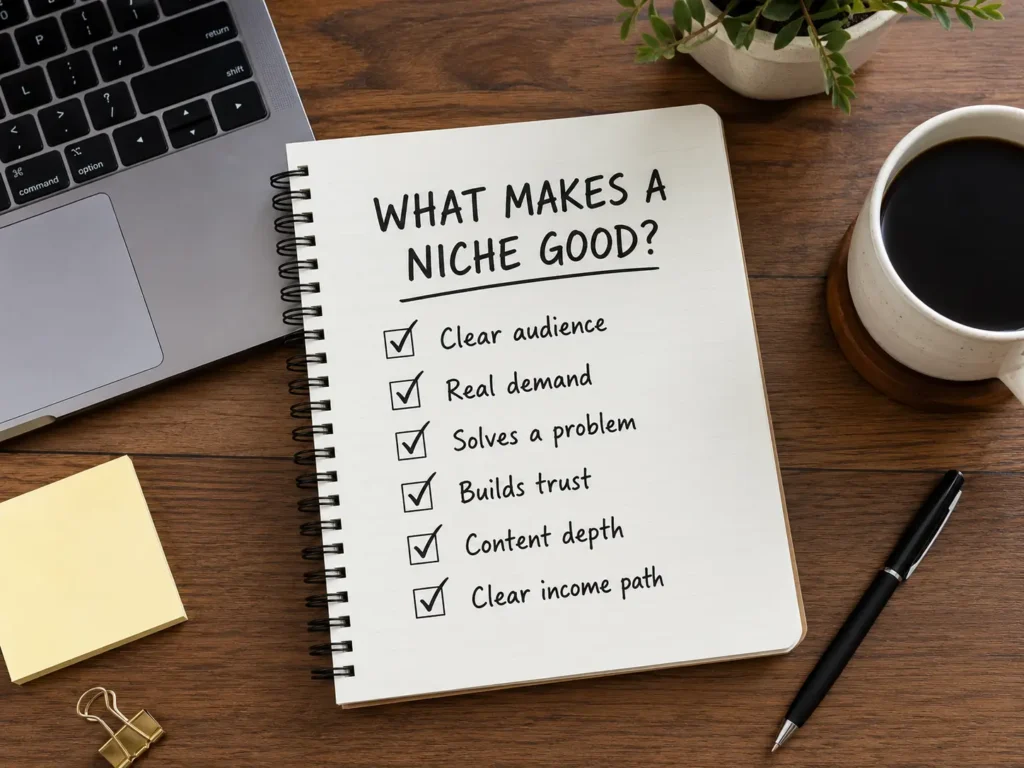
A good niche has clear signs.
People search for it often.
People have real problems inside it.
You can create many useful articles around it.
It connects to trusted tools, platforms, or services.
You can explain it better over time.
It gives your website a clear identity.
It helps your audience make decisions.
For Job1First, a strong niche is not just “online jobs.” It is more focused than that.
It is about helping people find realistic online income ideas, compare platforms, avoid fake opportunities, and choose better paths from home.
That is much stronger than just publishing random work-from-home articles.
Should You Follow a Popular Niche or Create Your Own Angle?
I think the answer is both.
You can enter a popular niche, but you need your own angle.
For example, “make money online” is popular. But if you write the same article as everyone else, you disappear.
Your angle could be:
Honest comparisons.
Realistic expectations.
Beginner-friendly explanations without using the word “beginner” everywhere.
Platform reviews.
Pinterest-friendly guides.
Simple online income ideas.
Avoiding scams.
Choosing the right niche before starting.
That is how you make a crowded niche feel fresh.
My Advice Before Choosing Your Niche
Don’t choose a niche because it looks rich.
Choose a niche because you understand the reader’s problem.
Don’t write for everyone.
Write for the person who is confused, searching, comparing, and trying to avoid wasting time.
Don’t build your content around promises.
Build it around clarity.
That is how you create content people remember.
A Simple Niche Decision Checklist
Before you choose your niche, ask yourself:
Can I write about this topic for the next six months?
Do people already search for answers in this area?
Can I help people avoid mistakes?
Can I recommend useful platforms, tools, or methods naturally?
Can I make my content more honest than what is already ranking?
Can I create Pinterest pins around this topic?
Can this niche grow into multiple article ideas?
If most answers are yes, start testing.
If most answers are no, keep looking.
My Final Take
Choosing the right online income niche is not about finding the perfect idea. It is about finding a direction that fits your time, skills, patience, and the kind of work you can actually continue doing.
My advice is simple: don’t chase every trend.
Pick one niche, test it, learn from the result, then improve.
The internet is already full of articles that list random ideas. I don’t want to add more noise. I want Job1First to become a place where people find clear, useful, and honest content before they waste time on the wrong path.
If you liked this article, leave a comment below and tell me what problem you are facing right now. Are you confused about choosing a niche? Are you stuck between different online income ideas? Or do you already have a niche but don’t know how to start? I read the comments, and your question may help me write the next useful guide on Job1First.